


Please join our upcoming Virtual RAPS Info Session (CST Time):
Welcome from the RAPS Director
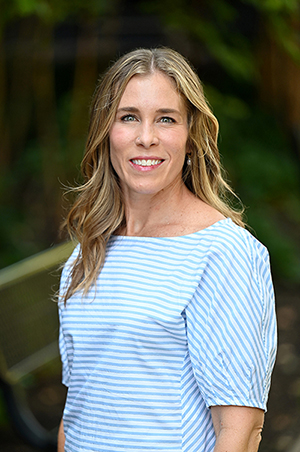 How do you know if a career in rehabilitation and participation science a good fit for you? Embarking on a PhD is a challenging commitment, one that takes both capability and courage. Most of all, it is a path that requires an insatiable sense of curiosity.
Rehabilitation and participation scientists are the ones who are always asking questions about people’s performance and participation in daily life. How can environment modifications help older adults live safely and independently for longer? Why do stroke patients who are lonely lag behind others in their physical recovery? How can schools become more effective in supporting children with asthma? What factors influence social participation among people with brain injury?
Examining such questions, identifying factors that matter, and drawing conclusions from data is an exciting way to make a difference in human health. We create evidence that leads to improved outcomes and meaningful participation for clients, care partners, and communities. We develop effective methods, assessments, and interventions that clinicians and community members can readily use. Our work shines light on areas that may have been neglected or misunderstood. The time and effort we spend on seeking answers to persistent questions about daily performance and participation is always worthwhile, and sometimes even revolutionary.
At WashU, we pride ourselves on cultivating a supportive and challenging research ecosystem for PhD students. Here, you will find peers and mentors helping one another in the shared spirit of discovery. You will gain a strong foundation of knowledge underlying a biopsychosocial perspective of function, learn principles of rigorous and ethical research, and develop advanced skills in research design, analysis, and dissemination. Our community-engaged approach will ensure that your work will translate to make a positive impact in the real world where it matters most.
As a proud RAPS alumna, it is an honor to serve as director of the program, now in its 15th year. I have witnessed the program grow and evolve over the years and am impressed by the leadership and impact of my fellow RAPS alumni. Please join us as we continue to drive the future of occupational therapy and rehabilitation science.
Erin Foster, PhD, OTD, OTR/L, FAOTA
Associate Professor of Occupational Therapy, Neurology and Psychiatry
Director of Graduate Studies for the RAPS PhD Program
About the RAPS Program
The Rehabilitation and Participation Science (RAPS) PhD program aims to develop scientists whose research questions have strong potential to generate rehabilitation knowledge that will enhance health, participation, and quality of life among populations experiencing illness and disability.
We embrace a collaborative, community-engaged, and interdisciplinary approach to rehabilitation science. The RAPS program provides a robust research environment that nurtures early investigators and provides a clear career trajectory for the future. Our students and mentors have passion for science, the ability to “think big”, and desire to advance occupational therapy research and practice.
Our doctoral training model consists of foundational coursework and mentored research, wherein students become increasingly independent in their research activities. Students choose mentors from rehabilitation scientists who hold primary appointments in the OT program. Areas of research may include rehabilitation interventions and services, social and community participation, community engagement, implementation science, management of chronic disease, cognitive rehabilitation, health promotion, child development, and rehabilitation outcomes and informatics. Graduates of the RAPS PhD program will be prepared for a post-doctoral fellowship, and long-term, a career as an academic rehabilitation research scientist.
Full-Time RAPS Curriculum
RAPS students must complete four core courses, other University courses to support their area of study, a qualifying exam, research in their mentor’s laboratory, and a dissertation. They typically take four to five years to complete all requirements.
Prior graduate courses that meet program requirements may be considered (syllabus must be approved by the RAPS PhD Chair).
RAPS students will be immersed in their mentor’s research lab, where they will develop skills related to the management of research studies and teams. Through these experiences, they will apply what they have learned in their coursework to ongoing research, and develop and execute their dissertation project.
Part-Time RAPS Curriculum
The part-time RAPS program provides an opportunity for working adults to earn their PhD over a longer period while maintaining their other responsibilities. Part-time RAPS students follow the same curriculum as full-time students but are expected to complete their degree in five to seven years, assuming they take eight credits a semester.
Click here to see an example of coursework for full-time and part-time students.
Meet RAPS alumni and hear about their reasons for choosing WashU.


Is a PhD right for you?
PhD training is time-intensive and highly specialized. The following resources provide more information about the work of a rehabilitation scientist to help you decide if PhD training fits your goals.
The Demystifying Research podcast, hosted by Program in OT faculty Kelly Harris, PhD, CC-SLP, and Catherine Hoyt, PhD, OTD, OTR/L, discusses many aspects of research careers including applying for programs, navigating the PhD experience and developing a positive mentee/mentor relationship. Episode 6 of Season 4 features Dr. Audrey Keleman, sharing what a day in her life looked like when she was a RAPS student.
This CLASI (Collaborative for Leadership in Ayrs Sensory Integration) video features Dr. Harris and Dr. Hoyt exploring the journey of becoming clinician scientists and the critical issues they have investigated to integrate research into clinical practice.
Application Process and Requirements
Students pursue the RAPS PhD degree because of their desire to generate knowledge to improve rehabilitation practices and thus people’s lives through participation in daily life. Students with a clinical degree at the bachelor's, master's or doctoral level are welcome to apply. Prior research experience is strongly encouraged.
In addition to meeting basic admissions requirements, there must be a strong conceptual or methodological fit between a candidate’s research interests and one or more RAPS PhD faculty members who are willing to guide the student’s training. Please review the listing of our RAPS PhD faculty mentors to explore a potential match that will meet your training goals and needs.
Applications for entry in Fall 2027 are open from September 1, 2026. Applications must be submitted by December 1 at https://gradadmit.wustl.edu/apply/.
For more information about the RAPS PhD program, please contact Dr. Erin Foster at 314-286-1638 or e-mail her at [email protected].
Applicants must submit all of the following:
-
A completed application form.
-
$45 application fee.
-
An essay that details why you are choosing this program of study and Washington University to prepare for a scientific career. Please address your motivation for study in rehabilitation and participation science, prior research and/or clinical experience, short- and long-range career goals, and the specific area of your interest.
-
An example of your scholarly writing such as a publication or college research paper.
-
Official transcripts of all post-secondary academic work. Applicants holding transcripts from institutions outside the United States are required to have the transcripts evaluated by a credentialing agency (names of agencies may be obtained by contacting the Program in Occupational Therapy). The evaluation must include course names, grades and credits in American terms. No international transcripts will be accepted without an evaluation from a credentialing agency, such as NACES or WES.
- Three letters of recommendation describing your capabilities for PhD studies.
-
International candidates for whom English is not the first language are required to submit official English language proficiency test scores as part of their application for admission according to the university's requirements, described here.
-
An interview (via Zoom or in person) may be requested as part of the admissions process.
PhD Financial Information
Tuition Support and Stipends
Full tuition remission is provided to full-time students and tuition remission up to 8 units/semester is provided to part-time students. Annual stipends are available for full-time students but not part-time students. The annual stipend amount for the 2026-2027 academic year is $38,300. Once a stipend has been awarded, the customary procedure is to provide two years of support. Stipend funds for additional years may be from individual grants or mentor’s grants. If this is not possible, a stipend for additional time is to be negotiated with the RAPS PhD Director and the Associate Dean of the Program in Occupational Therapy.
Because the stipend is provided on a yearly basis, the work commitment is for a calendar year. In addition to University holidays, RAPS students may take religious holidays they observe and up to 20 vacation days per calendar year.
Fellowships and Doctoral Scholarships
Fellowships and/or doctoral scholarships should be sought by the students as soon as they are qualified for such support. The funds obtained from these scholarships are to replace, not supplement, program-provided funds.
RAPS applicants are eligible to apply for the Ann W. and Spencer T. Olin-Chancellor's Fellowship, which provides full tuition scholarship and an annual stipend, plus priority housing and other benefits. Application for the fellowship must be submitted at the same time as the application for the RAPS program.
Washington University encourages and gives full consideration to all applicants for admission, financial aid and employment.
Washington University - Non-Discrimination Statement
The School of Medicine is committed to recruiting, enrolling and educating a diverse student body.
Inquiries about compliance should be addressed to the University's Vice Chancellor for Human Resources, Washington University, Campus Box 1184, One Brookings Drive, St. Louis, MO 63130-4899.
For more information about the Rehabilitation and Participation Science (RAPS) PhD program, please contact Dr. Erin Foster at [email protected].
Program in Occupational Therapy
Washington University School of Medicine
4444 Forest Park Blvd., MSC 8505-66-01
St. Louis, MO 63108-2212
Phone: 314-286-1600
FAX: 314-286-1601
