

From WashU to City Hall: Adam Pearson’s Path to Public Service
by Abby King •July 10, 2026
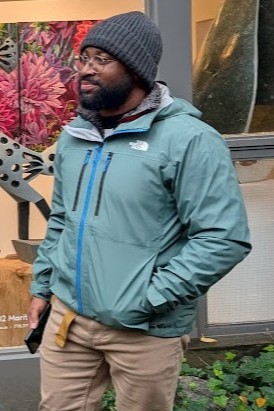
When Adam Pearson, OTD ’11, talks about his work, the throughline is clear: occupational therapy remains at the center of how he thinks about systems, access, and participation. Today, he serves as Director of the Department of Human Services for the City of St. Louis, overseeing homeless services, aging, disability, and youth and family programs, as well as major disaster response efforts following the 2025 tornado. It is not a traditional OT role, but Pearson says his WashU Medicine training continues to shape everything he does.
“I’m all over the place,” he says with a laugh. “It’s wacky. But we have a really great squad. I don’t carry any of this by myself.”
As DHS director, Pearson leads a department of about 60 staff members and manages a budget that typically ranges from $40 - $55 million. His portfolio is wide-ranging and key to the city’s vitality. The May 2025 tornado affected roughly 20,000 buildings, displaced 5,000 to 6,000 households, destroyed 500 homes, and caused moderate damage to thousands. In its aftermath, the DHS team has been responsible for mass care efforts, helping ensure access to shelter, food, supplies, and longer-term support for displaced residents.
Despite the scale of the work, Pearson brings an optimistic, steady presence to the role. He says that optimism is rooted in the collaborative nature of public service and the strength of his team.
His OT background, he explains, informs how he approaches policy, programming, and systems design. “A big part of what I learned at WashU was how to engage systems to help people get back to their daily activities and live life to the fullest,” he says. “A lot of my role now is working to create systems, often in collaboration with community providers, that are evidence-based and actually usable by the people we’re trying to serve.”
That perspective shows up in practical ways across his department’s work. Pearson sees core OT concepts such as participation, performance, environment, and access reflected in everything from reviewing building plans for accessible entrances and restrooms, to addressing sidewalks disrupted by tree roots, to funding eviction prevention so families can continue meeting basic needs. Even routine infrastructure decisions, he says, can shape whether people can fully participate in community life.
In one recent mayor’s cabinet meeting, Pearson raised a question about streetlight programming that reframed the discussion around accessibility. “I asked, how do you know how long to set the signal, especially for pedestrians? Some intersections are larger than others. Some of our citizens move more slowly or use wheelchairs,” he recalls. “Are you talking to the Office on the Disabled about this?”
As an OT, that kind of question is second nature for Pearson. “A lot of what we believe is just how common infrastructure affects everyday life for many different people,” he says. “My OT lens helps me constantly ask: how does this system actually impact the people on the receiving end?”
One of the most visible examples of that thinking is Code Blue, a redesigned winter shelter response developed after the tornado. Many residents attempted to remain in damaged homes through the winter, only to face worsening conditions as temperatures dropped. The city needed a stronger, more flexible response than its traditional practice of adding 100 to 200 shelter beds on the coldest nights.
Pearson and his team worked with the local Continuum of Care and national shelter providers to build a tiered system that could scale quickly and adapt to different needs. Code Blue includes four activation levels based on temperature and risk, from milder cold above freezing to extreme cold around 10 degrees. Each level triggers a specific shelter response, including hotel-based non-congregate shelter for families and individuals who cannot safely stay in large group settings. The system also includes coordinated transportation through partnerships with Bi-State Development and emergency management agencies.
“We wanted an infrastructure that was nimble and adaptable, that could scale up or down based on need and temperature,” Pearson says. Through rapid planning, the city moved from having no hotel beds available to the ability to scale up to as many as 10,000 beds if needed.
By the end of winter, Code Blue had sheltered more than 700 to 800 unique individuals and provided more than 24,000 bed nights. Roughly 500 residents used the transportation system, and more than 100 families displaced by the tornado stayed in hotels for an average of more than two months before transitioning either home or into more stable housing.
“We didn’t know what the demand would be, and it was a very short planning window, but I’m proud of what we were able to build together,” Pearson says. DHS is now working with partners to determine what Code Blue should look like in future winters amid changing needs and funding uncertainty.
That uncertainty extends to the broader public service landscape. When asked about future projects, Pearson replied “To be honest, I don’t know what’s going to happen with the federal budget. The federal government has deprioritized a number of programs and populations that are close to our hearts at DHS.” In response, he and his team are shifting positions from federal to local funding where possible, rebalancing budgets, and working to protect core services.
“The name of the game for me is continuity right now,” he says. “People in St. Louis need stability in senior services, homeless services, youth and family programs—all of it. Keeping things consistent after the pandemic, a tornado, and administrative changes is meaningful. We’re never bored. There’s always something to do.”
Pearson’s path to City Hall was built through a series of nontraditional OT roles. After graduating from WashU Medicine’s Program in OT, he worked in research and policy at WashU’s Brown School for Social Work. Though the work was not labeled OT, it focused on social determinants of health and helping people make better decisions in daily life.
He later spent four months as a travel therapist in Dalhart, Texas, where he worked with ranchers and cowboys. The setting was far from St. Louis, but the OT process was familiar. He remembers one patient in particular, a saddle maker with arthritis. “I was in his shop talking through joint protection while he showed me how he made saddles,” Pearson says. “We broke down every step of the process. You don’t see saddle making in St. Louis, but the OT principles were the same.”
Back in St. Louis, Pearson worked in community mental health and homeless services at Peter & Paul Community Services, where he helped people in housing programs build the daily skills needed to stay housed and independent. “All of that was straight from my WashU OT education,” he says. “It was OT, even if it didn’t look like a traditional hospital or outpatient setting.”
Throughout those roles, one theme remained constant: a commitment to people marginalized by systems and a focus on participation —how people actually live, not just how they perform on assessments.
Pearson credits WashU faculty members including Jeanenne Dallas, Pat Nellis, and Lisa Tabor Connor with helping him imagine what OT could look like beyond traditional practice. “They helped me think about what OT in the community looks like, how it’s shaped differently than OT in traditional settings, and how to use our voice to advocate for what we’re passionate about,” he says.
He also points to the core competencies he uses every day: understanding systems and environments, collaborating across disciplines, thinking in evidence-based ways, and applying community mental health principles. “Even if I’m not using the models or doing range of motion, the foundations are the same,” he says. “Understanding systems, environments, and participation—that all came from WashU.”
For students considering careers beyond traditional clinical practice, Pearson offers a simple message: there is room for OT in public service. “City government is always looking for qualified, brilliant folks,” he says. “You may not see ‘occupational therapist’ in the job title, but there are so many places where our lens is needed.”
He encourages students to learn how government works, become comfortable with policy, build relationships across disciplines, and use OT principles to advocate for accessibility and equity. “Bring your OT perspective on participation, accessibility, and equity into those spaces,” he says. “Learning how to apply OT across sectors is what makes for a really fulfilling career.”
Looking back on his time at WashU, Pearson remembers a community that extended well beyond the classroom. “WashU has this great culture where people come from all over the country,” he says. “Some of my best memories were simply connecting with classmates outside of the classroom.” Today, Pearson remains connected with many of those classmates, a reminder that the relationships formed at WashU continue to matter long after graduation.
His career demonstrates the breadth of what a WashU OT degree can make possible: from travel therapy to community mental health, from research and social policy to leading human services for an entire city. As Pearson puts it, “There’s always something for somebody. If you care about people and you’re curious about systems, OT can take you a lot of places — even to City Hall.”